
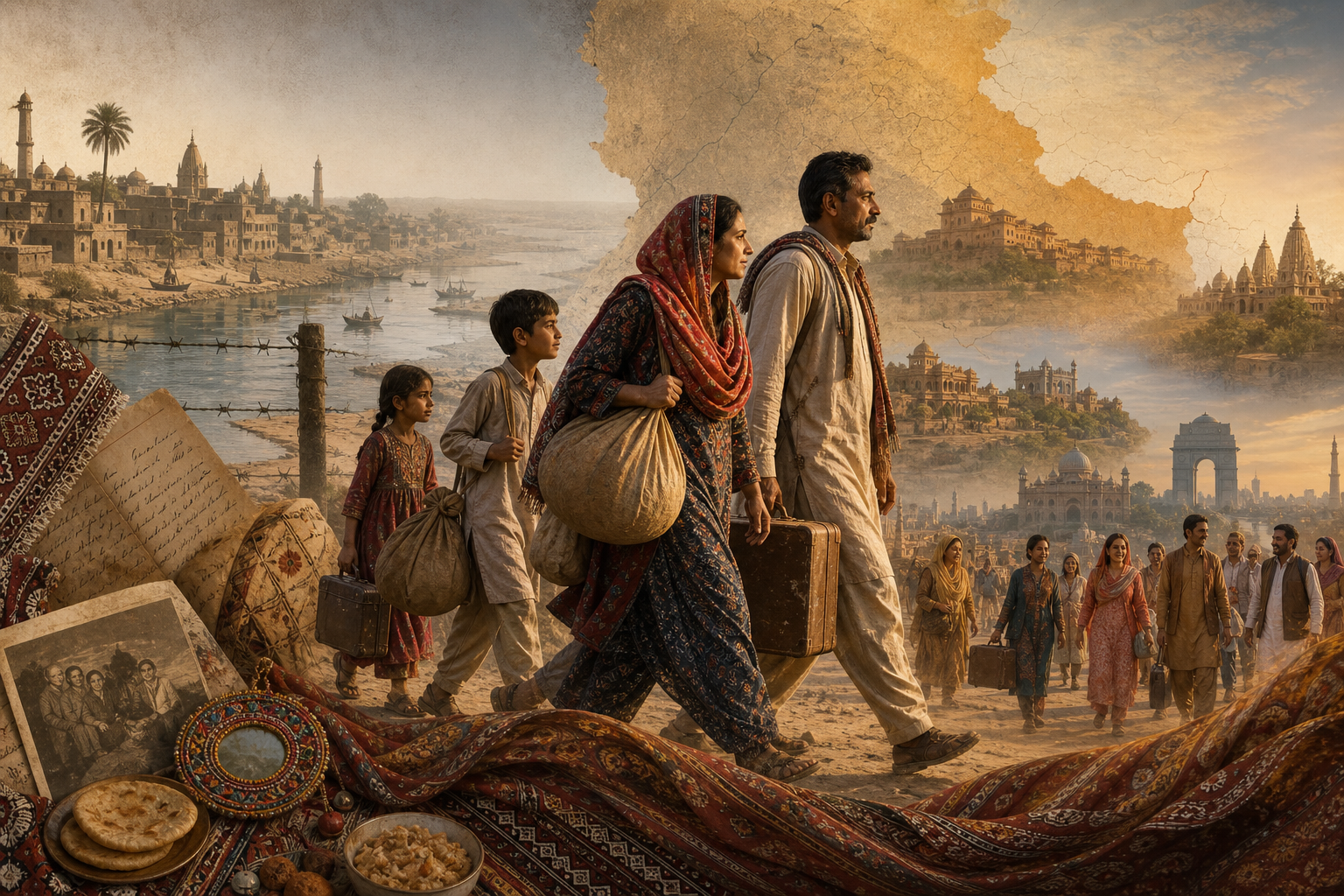
The Partition of 1947 divided more than a country. It divided homes, families, memories and identities.
Punjab was divided. Bengal was divided.
But Sindh had a different story.
Sindh was not divided — the entire province became part of Pakistan. A large number of Hindu Sindhis left the land where their families had lived for generations and migrated to India.
They came carrying whatever they could — belongings, memories, language, traditions and the hope of beginning again.
A New Home Without Our Old Land
Sindhis settled across India — in Rajasthan, Gujarat, Maharashtra, Madhya Pradesh, Delhi and elsewhere.
They rebuilt their lives, businesses and communities. India became home, not just geographically but emotionally too.
Yet there was something unusual about the Sindhi experience.
Unlike some other displaced communities, Indian Sindhis did not have an Indian part of Sindh to return to or identify as their ancestral state.
Sindh reh gaya, aur Sindhi chale aaye.
The people moved. The homeland remained behind.
Sindh Still Travels With Us
For generations like ours, Sindh is mostly a place inherited through stories.
Many of us have never seen it. We haven’t walked through the streets where our grandparents or great-grandparents lived.
Yet Sindh somehow feels familiar.
It survives in Sindhi boli, in our food, our traditions, our surnames, our celebrations and the stories passed from one generation to another.
Perhaps that is the strange power of roots.
You don’t necessarily have to live on the land of your ancestors for that land to remain a part of you.
I am Indian. India is my home. And I am Sindhi.
These identities don’t compete with each other.
Hindustan gave our families a place to rebuild their lives, while Sindh remained a part of the history that shaped who we are.
Borders changed geography.
They couldn’t completely change belonging.
A Thought Unfolded
Maybe home and homeland don’t always have to be the same place.
Hindustan hamara ghar hai,
par Sindh hamari jadon mein hai.
And perhaps that is why, even generations after Partition, a little piece of Sindh continues to live wherever a Sindhi goes.

Leave a Reply